OpenClaw Using Ace Data Cloud Tutorial
OpenClaw is a multi-channel AI gateway and scalable plugin runtime that supports the integration of third-party models and tools as plugins. @acedatacloud/openclaw-provider is the official OpenClaw plugin that connects over 50 large language models from Ace Data Cloud and Google web search into OpenClaw, which can be called using a single API Key.
This article describes how to install, configure, and use the Ace Data Cloud plugin in OpenClaw.
¶ Application Process
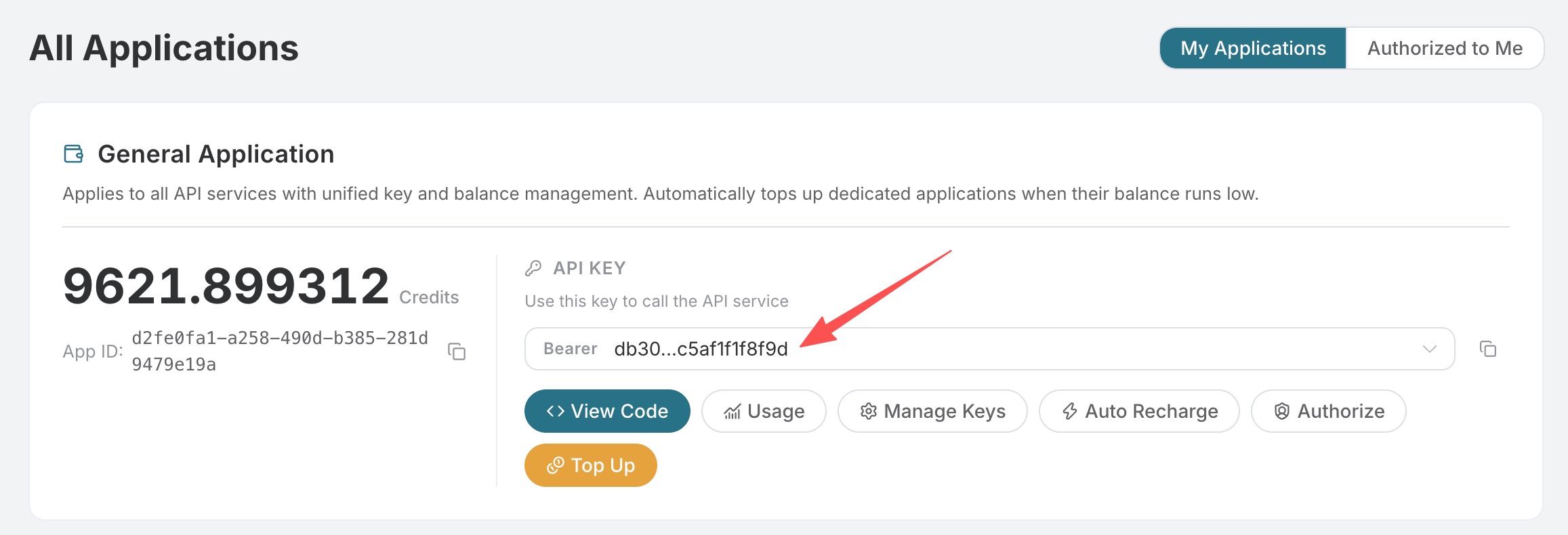
To use this plugin, you can first go to the Ace Data Cloud Console to obtain your API Token for future use.

If you are not logged in or registered, you will be automatically redirected to the login page inviting you to register and log in. After logging in or registering, you will be automatically returned to the current page.
There is a free quota available for first-time applicants, allowing you to experience the services provided by this plugin for free.
¶ Install OpenClaw
If OpenClaw is not yet installed, you can install it globally via npm:
npm install -g openclaw
After installation, check if the command is available:
openclaw --version
Node.js version 20 or higher is required.
¶ Install Ace Data Cloud Plugin
OpenClaw integrates third-party models through a plugin mechanism. Install @acedatacloud/openclaw-provider:
openclaw plugins install npm:@acedatacloud/openclaw-provider@2026.5.34 --pin
After installation, OpenClaw will automatically register a acedatacloud channel that can support both Chat and Web Search capabilities.
After installation, perform a static check:
openclaw plugins info acedatacloud --runtime
openclaw plugins doctor
openclaw models list --all --provider acedatacloud
openclaw models status
¶ Configure API Token
There are three ways to configure the API Token:
¶ Method 1: Environment Variable (Recommended)
Write the following content into ~/.zshrc, ~/.bashrc, or ~/.bash_profile:
export ACEDATA_API_KEY="{token}"
Replace {token} with the API Token you copied from the Ace Data Cloud console. You can also use the alias environment variable ACEDATACLOUD_API_KEY, both are equivalent.
After configuring, reopen the terminal or execute:
source ~/.zshrc
¶ Method 2: Interactive Onboarding
Run:
openclaw onboard --auth-choice acedatacloud-api-key
OpenClaw will prompt you to enter the API Token and automatically write it into the user configuration file.
¶ Method 3: Command Line Parameter
You can also pass it directly via the --acedata-api-key <key> parameter when calling.
¶ Use Chat Capability
Once configured, you can call the LLM provided by Ace Data Cloud in OpenClaw. The model ID is in the form of acedatacloud/<model-name>.
One-time Agent Call — Use the current openclaw agent --local to run a single-turn conversation:
openclaw agent --local --model acedatacloud/MODEL_ID -m "Reply exactly OPENCLAW_OK"
openclaw plugins info acedatacloud --runtime
Set as Default Model — Subsequent interactive / Agent runs will default to using it:
openclaw models set acedatacloud/MODEL_ID
Single Agent Task — Let the local Agent run a turn (the current shell must have the API Token set):
openclaw agent --local --model acedatacloud/MODEL_ID -m "Reply exactly OPENCLAW_OK"
¶ Select Exact Model
The model list is based on the intersection of the selector and the real-time directory, and a static copy that is easy to expire is not maintained in this article. The selector will only generate configurations for exact models that have completed evidence binding for the current profile.
The plugin supports sending requests for acedatacloud/<id> in an OpenAI-compatible manner to https://api.acedata.cloud/v1:
openclaw agent --local --model acedatacloud/MODEL_ID -m "Reply exactly OPENCLAW_OK"
Dynamic IDs must also appear in the current allowlist of the selector and complete the evidence of client tool calls for this profile; merely appearing in /v1/models does not guarantee OpenClaw compatibility.
¶ Use Web Search Capability
The plugin also registers a web search provider, using Ace Data Cloud's Google SERP interface. OpenClaw will automatically call it in the Agent workflow, and it can also be explicitly called using openclaw infer web search:
openclaw infer web search --provider acedatacloud --query "Latest AI Agent Framework" --limit 5
The available command line parameters are --provider, --query, --limit, and --json. The underlying Google SERP interface also supports search types such as search (web, default), images, news, videos, maps, places, etc., which OpenClaw will select as needed in the Agent workflow.
¶ Billing Information
The plugin itself will not incur duplicate charges — all usage is calculated on the Ace Data Cloud platform side based on Credits (priced by model and request size). Chat and Web Search share the same API Token, and call records can be viewed at platform.acedata.cloud/console/usages.
To avoid duplicate estimations by the OpenClaw client, the plugin reports cost: 0 to OpenClaw.
¶ Manual Configuration
If you wish to edit the configuration file directly, you can write the API Token, default model, and enable the plugin in ~/.openclaw/openclaw.json:
{
env: { ACEDATA_API_KEY: "ace-..." },
agents: {
defaults: {
model: { primary: "acedatacloud/MODEL_ID" },
},
},
plugins: {
entries: {
acedatacloud: { enabled: true },
},
},
}
Do not add cross-model fallbacks yourself. Fallbacks will change the actual model and billing contract, and can only be enabled when explicitly generated and marked by the selector.
¶ Troubleshooting
| Phenomenon | Troubleshooting Direction |
|---|---|
Ace Data Cloud API key not configured |
ACEDATA_API_KEY/ACEDATACLOUD_API_KEY not set, or onboarding not completed |
HTTP 401 |
API Token is incorrect or disabled, please regenerate it in the console |
HTTP 402 |
Insufficient balance, please recharge at platform.acedata.cloud/console/balance |
HTTP 429 |
Triggered request rate limit, please try again later or adjust the concurrency limit in the console |
| Model ID not in the built-in directory but can still be called | This is expected behavior: dynamic ID passthrough |
More debug logs can be opened with the global parameter --log-level debug, for example, openclaw --log-level debug agent --local --model acedatacloud/MODEL_ID -m "test".
¶ Related Links
- Plugin repository:
AceDataCloud/OpenClawProvider - npm package:
@acedatacloud/openclaw-provider - OpenClaw official website:
openclaw.ai - Ace Data Cloud console:
platform.acedata.cloud