Codex CC Switch Graphical Configuration Tutorial

Codex is a programming agent launched by OpenAI, which determines where requests are sent through the custom model_provider in ~/.codex/config.toml. By pointing it to the OpenAI Responses compatible proxy of Ace Data Cloud, you can use Codex at a lower price without needing a separate subscription to the official OpenAI account. Manually writing TOML configurations is not user-friendly for beginners, while CC Switch provides a graphical interface to help you easily create config.toml and auth.json, and switch between multiple vendors instantly.

This article explains how to connect Codex to Ace Data Cloud using CC Switch.

What is CC Switch

CC Switch (official website ccswitch.io) is an open-source, cross-platform desktop configuration manager used to manage the configurations of multiple AI programming tools such as Claude Code, Claude Desktop, Codex, Gemini CLI, OpenCode, OpenClaw, Hermes, etc. It is built on Tauri 2 and is open-sourced under the MIT license, having received over 110,000 stars on GitHub (see farion1231/cc-switch).

For Codex, CC Switch will manage two configuration files for you (see the official User Manual and 5.1 Configuration File Description):

  • ~/.codex/config.toml — stores model and interface configurations (model_provider, base_url, wire_api, etc.);
  • ~/.codex/auth.json — stores the API key.

The official main interface of CC Switch is as follows (screenshot from CC Switch official repository):

CC Switch Main Interface

Apply for API Token

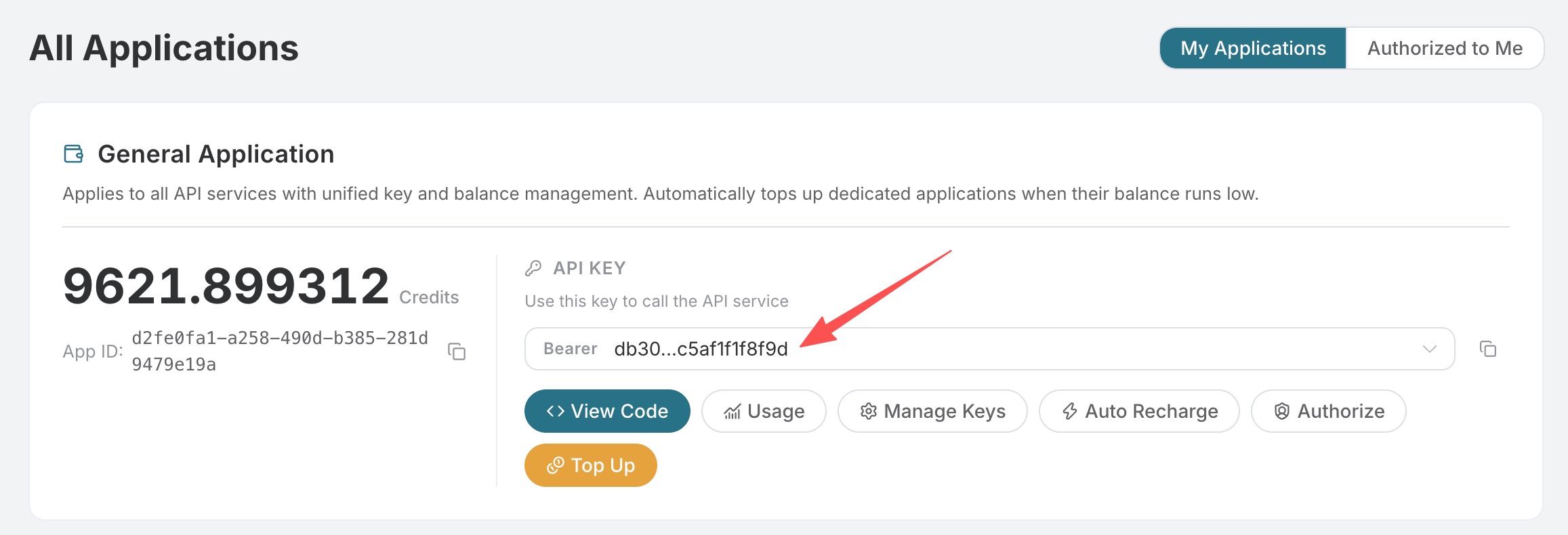
To use Codex, first go to the Ace Data Cloud Console to obtain your API Token for backup.

If you are not logged in or registered, you will be automatically redirected to the login page inviting you to register and log in. After logging in or registering, you will be automatically returned to the current page. There will be a free quota offered for first-time applicants, allowing you to experience Codex services for free.

Download and Install CC Switch

Go to the Releases page of CC Switch (or directly download the latest version) and select the corresponding installation package based on your operating system. The following installation methods are all from the official README:

Operating System System Requirements Installation Method
Windows Windows 10 and above Download CC-Switch-v{version}-Windows.msi installer, or -Windows-Portable.zip portable version
macOS macOS 12 (Monterey) and above Recommended brew install --cask cc-switch, or download .dmg (signed and notarized by Apple, can be opened directly)
Linux Ubuntu 22.04+ / Debian 11+ / Fedora 34+ Download .deb / .rpm / .AppImage; Arch users can use paru -S cc-switch-bin

Add Ace Data Cloud Vendor

CC Switch has built-in presets for over 50 vendors, but currently does not include Ace Data Cloud, so we will add it using the "Custom" method. The following steps correspond to the official documentation 2.1 Add Provider.

  1. Switch to the Codex application at the top of CC Switch.
  2. Click the + (Add Provider) button in the upper right corner to open the add panel.
  3. Select Custom from the preset dropdown, then fill in the configuration.

The official "Add Provider" panel of CC Switch is as follows (screenshot from CC Switch official repository):

CC Switch Add Provider Panel

Fill in the following information:

Field Content to Fill
Name Ace Data Cloud (customizable)
Base URL https://api.acedata.cloud/v1
API Key / Token The API Token you copied from the console

The custom configuration for Codex consists of two files (format reference in the official Codex Configuration Format). CC Switch will write the following into ~/.codex/config.toml:

model_provider = "acedatacloud"
model = "gpt-5"
model_reasoning_effort = "high"

[model_providers.acedatacloud]
name = "Ace Data Cloud"
base_url = "https://api.acedata.cloud/v1"
wire_api = "responses"
requires_openai_auth = true

And into ~/.codex/auth.json:

{
  "OPENAI_API_KEY": "{token}"
}

Where {token} is replaced with the API Token you copied from the Ace Data Cloud console. After verifying that everything is correct, click Add to complete the addition.

The explanations for each field are as follows:

Field Description
model_provider The name of the default vendor, corresponding to [model_providers.acedatacloud] below
model The default model ID, recommended gpt-5
model_reasoning_effort Reasoning intensity, common values are low, medium, high
base_url The OpenAI Responses proxy address for Ace Data Cloud, must be https://api.acedata.cloud/v1
wire_api Protocol type, must be responses for using OpenAI Responses API
requires_openai_auth Set to true to let Codex use the key in auth.json as the authentication credential

No need to enable Local Routing: CC Switch's "Local Routing / Model Mapping" is only used for vendors that only support the OpenAI Chat Completions protocol or use non-GPT series model names (such as DeepSeek, Kimi). Ace Data Cloud is a native Responses protocol vendor (wire_api = "responses"), so keep Needs Local Routing off, see the official 2.1 Add Provider - Codex Presets.

  1. In the CC Switch "Add Provider" panel, switch to the Codex application, Name = Ace Data Cloud, Base URL = https://api.acedata.cloud/v1, API Key has been filled in with the status of ADC Token;
  2. In the Codex provider list, the Ace Data Cloud card is in the "Enabled" state. -->

Enable and Switch Provider

After adding, find the Ace Data Cloud card in the Codex provider list and click Enable (refer to the official 2.2 Switch Provider). You can also click the provider name directly from the system tray menu for instant switching.

Requires Restart: According to the official FAQ, except for Claude Code which supports hot switching, tools like Codex need to restart the corresponding CLI or terminal after switching providers for it to take effect.

Using in Terminal and VS Code

CC Switch is only responsible for writing configurations, the Codex itself still needs to be installed separately. After enabling the provider:

  • Terminal CLI: Install and run codex, the complete steps can be found in the Codex Terminal Configuration Guide. After entering the interactive interface, type /model, and you should see the current provider as acedatacloud.
  • VS Code Extension: Install the official OpenAI Codex extension from the extension marketplace (Marketplace ID: openai.chatgpt), the complete steps can be found in the Codex VS Code Configuration Guide. Since the VS Code extension and CLI share the same ~/.codex/config.toml configuration, the VS Code extension will directly reuse it after CC Switch has written it.

Verify Configuration

You can verify whether Codex can work through Ace Data Cloud using the same configuration in the terminal:

codex exec --model gpt-5-mini "Reply with exactly: ADC_Codex_OK"

If the configuration is correct, you should see a reply similar to:

ADC_Codex_OK

Switch Model

The model field in ~/.codex/config.toml determines the model that Codex uses by default. The OpenAI Responses service of Ace Data Cloud supports multiple models, commonly including gpt-5 (recommended default), gpt-5-mini (lighter), gpt-5.5, gpt-5.5-pro, etc. For a complete list of models and billing information, refer to the Ace Data Cloud OpenAI Service Documentation. You can also automatically discover available models from the /v1/models endpoint using the "Fetch Models" button in the CC Switch provider form (refer to the official Auto-Fetch Models).

Check Quota and Usage

Frequently Asked Questions

  • Not effective after switching? Confirm that you have restarted Codex / terminal; and check if model_provider in ~/.codex/config.toml points to acedatacloud. For the location of the CC Switch configuration file, refer to the official 5.1 Configuration File Description.
  • How to switch back to official login? Add the OpenAI Official provider from the preset list, Codex supports switching between multiple official accounts (refer to the official FAQ).
  • Where is the configuration data stored? CC Switch's own data is stored in ~/.cc-switch/cc-switch.db (SQLite), and the effective configuration is written to ~/.codex/config.toml and ~/.codex/auth.json.

Reference Sources