
I want to write a song with AI, but I often encounter not "lack of inspiration," but rather a fragmented process: first describing the theme in a chat tool, generating lyrics, then organizing style prompt words, and finally copying them into Suno's creation page. After listening, if I find the chorus not memorable enough, I have to go back to the chat window to revise the lyrics, then copy and regenerate. For first-time AI music creators, the most common stumbling block is often these back-and-forth switching steps.
Ace Data Cloud provides Suno music generation capabilities, including lyric creation, song generation, and more. This time, I used Ace Data Cloud Studio's chat window to complete the lyric and style conceptualization, then submitted song generation requests, trying to keep the entire creative process within the same conversation rather than repeatedly transferring content between different pages.
¶ First, look at the Suno creation tool
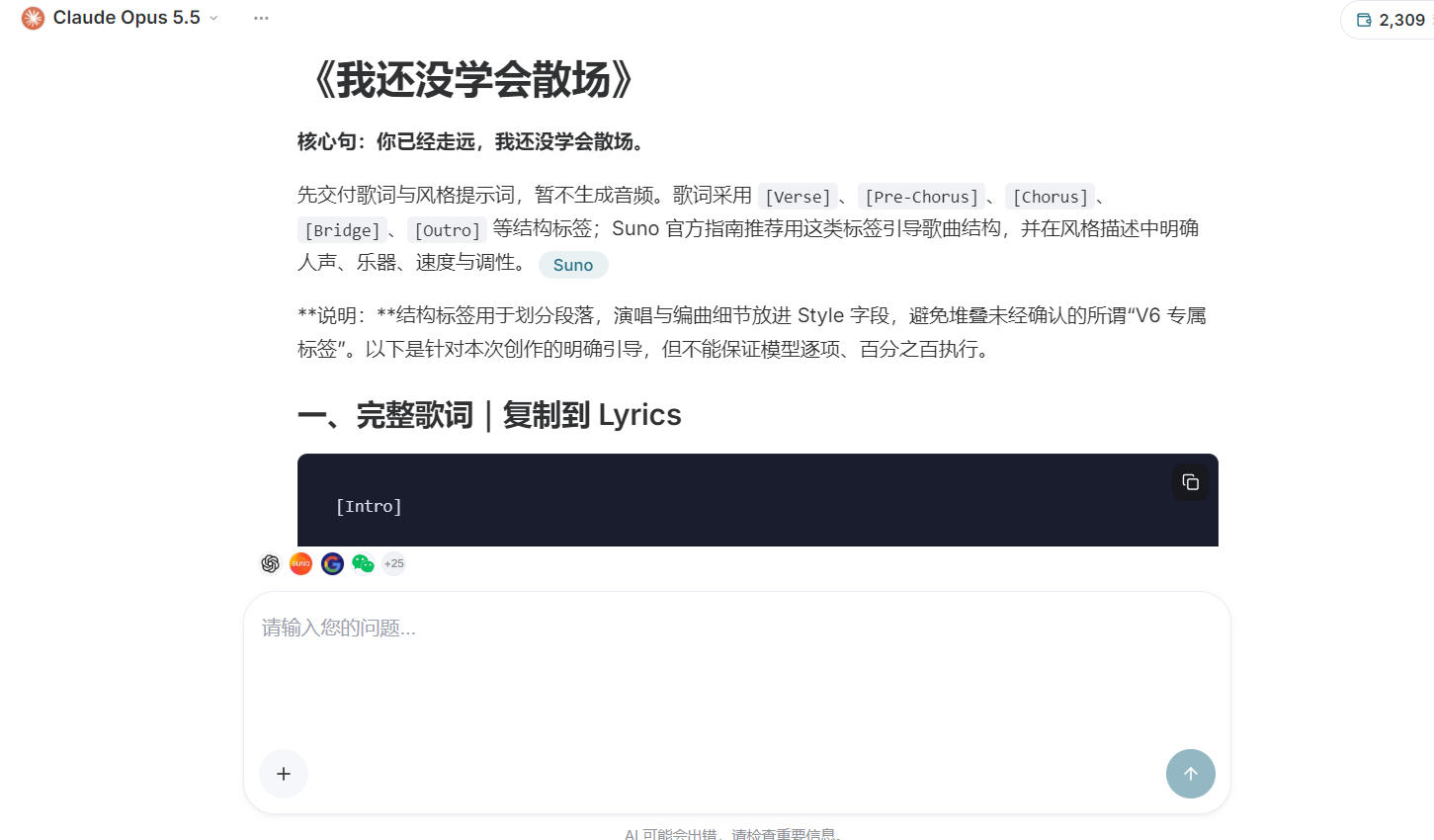
The image below shows Ace Data Cloud's Suno creation tool. It offers fairly complete creation options; but in this demonstration of a custom lyric creation process, we need to prepare the lyrics first. For beginners who only have a story but don't know how to write lyrics, starting directly from the chat window is more convenient.
Click directly to Ace Data Cloud Suno creation tool
¶ Step 1: Describe the desired song in Studio
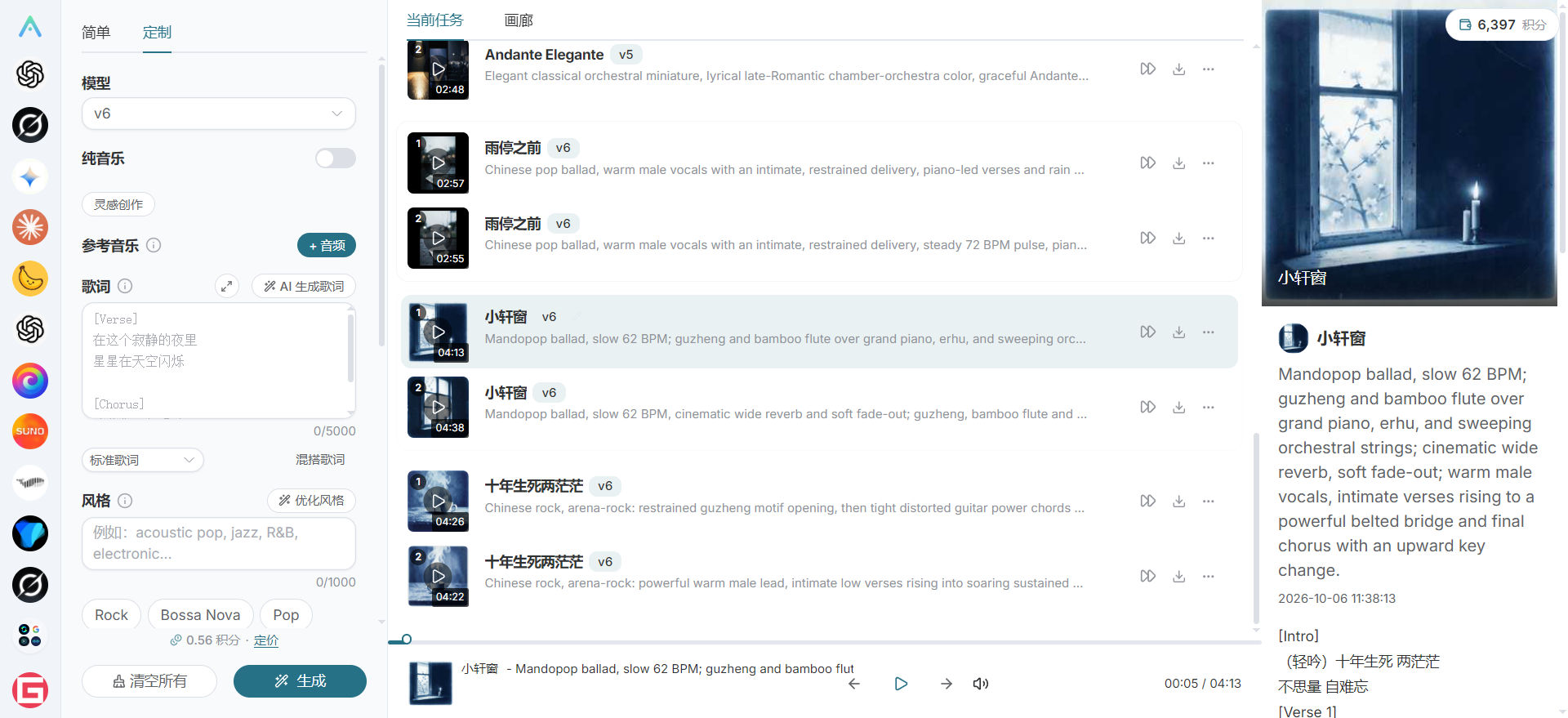
I open Ace Data Cloud Studio, and choose the Claude Opus 5.5 model to brainstorm lyrics and style. The focus here isn't to craft a complex, professional prompt first, but to clearly communicate the needs: what language the song should be in, what story it tells, the desired mood, and the kind of vocals and arrangement.
For example, this time I want a Chinese lyrical song about not being able to let go even after parting. After inputting such requirements into the chat window, I can wait for lyrics and style suggestions to be generated.
Input the song creation requirements and wait for the lyrics to be generated.
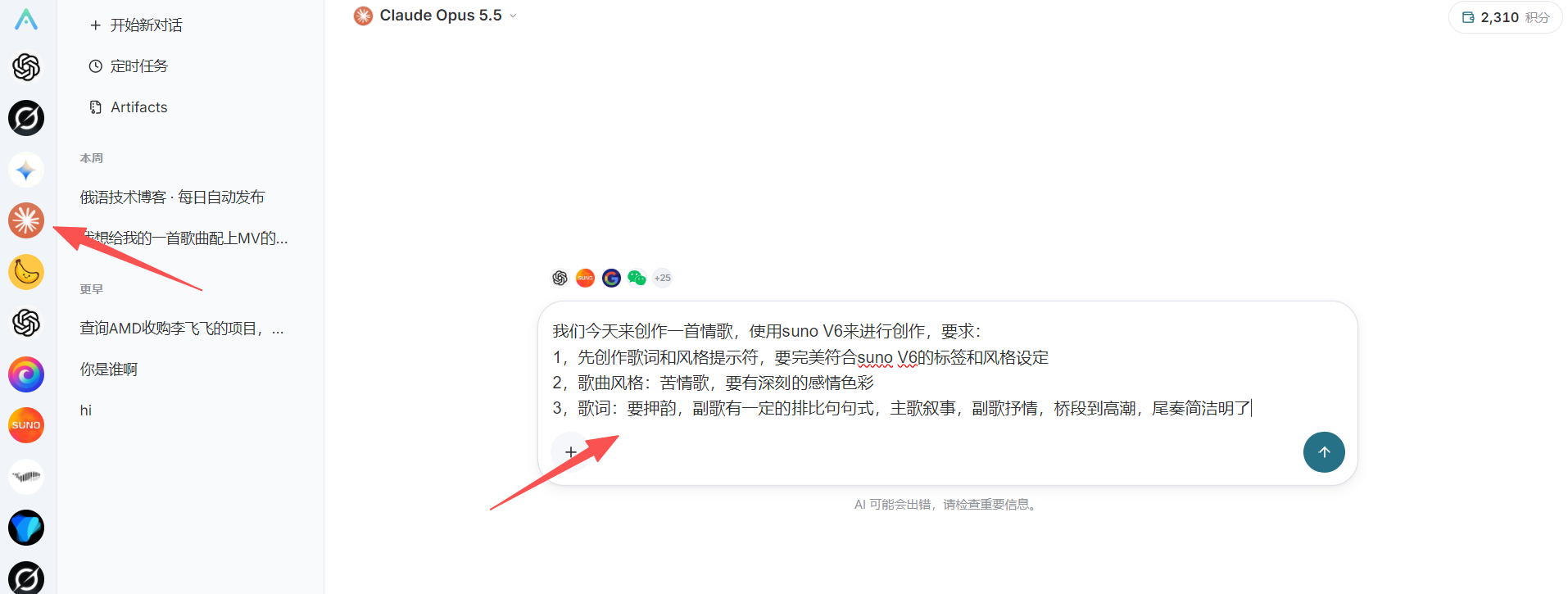
Lyrics are generated:
The output includes three parts: lyrics, style prompt, and style exclusions. They answer respectively "what to sing," "what it should sound like," and "what to avoid."
The lyrics are as follows:
[Intro]

[Verse 1]
The night you moved out, rain tapping on the window
I packed your old coat into a box
You gently placed the key on the table
As if afraid to wake our last moments
I ask if tomorrow will frost
But I dare not ask who will be by your side

[Pre-Chorus]
After the door closes, the room suddenly feels empty
That "don’t go" rolls hot in my throat

[Chorus]
I still take your silence as understanding
I still take your farewell as bravado
I still see no echo as you being busy
I still leave the empty pillow beside me

You’ve already gone far, I haven't learned to leave
Still waiting for that "we" to keep the lights on till dawn
The pain isn’t that you’ve gone far away
It’s that every future of mine, you’re not there

[Verse 2]
Later, the corner shop changed its look
The owner still asked why you didn’t show up
I said you were busy, smiling as usual
He placed two sets of bowls and chopsticks on the table
I pushed one set back into his hand
Only then did I realize that without one person, the meal cools

[Pre-Chorus]
I can tell my recent updates without a hitch
But on the way home, I bypass that long alley

[Chorus]
I still take your silence as understanding
I still take your farewell as bravado
I still see no echo as you being busy
I still leave the empty pillow beside me

You’ve already gone far, I haven't learned to leave
Still waiting for that "we" to keep the lights on till dawn
The pain isn’t that you’ve gone far away
It’s that every future of mine, you’re not there

[Bridge]
I finally admit that you’re not hiding
Nor waiting for me to be brave again
You truly don’t want to come back here
And I still lie about tomorrow with yesterday
If love ends with only each other remaining
I should let go, but I cry until I lose my voice

[Chorus]
I still take your silence as understanding
I still take your farewell as bravado
I still see no echo as you being busy
I still leave the empty pillow beside me

You’ve already gone far, I haven't learned to leave
Just let me cry once more, close this window again
I will return your name to the past
Only tonight’s moonlight still falls on old wounds

[Outro]
The lights go out, the day will brighten
You’ve gone, I slowly forget
Mandarin heartbreak ballad, contemporary Mandopop, slow 6/8 at 68 BPM, D minor. Solo male lead with a warm, slightly husky mid-low register, clear Mandarin diction and natural phrasing. Restrained grief, intimate storytelling, unresolved longing; bittersweet rather than angry. Short piano intro. Sparse felt piano, delicate acoustic guitar and low cello in the verses; close, conversational vocals. Pre-choruses gradually build tension. Choruses open into a memorable aching melody, swelling strings, warm bass and restrained live drums; give each parallel lyric line a similar rhythmic shape. Second chorus slightly fuller. Bridge drops to exposed piano and voice, then builds with rising strings and toms; a brief breath of silence before the final chorus. Final chorus is the emotional peak: full arrangement, passionate upper-register singing, subtle vocal cracks, no screaming. Outro strips back to piano, two softly sung lines, then a brief two-bar piano resolution. Vocal-forward mix, wide dynamics, minimal melisma.
Exclude styles:
EDM, dance-pop, upbeat mood, trap, rap, screaming, robotic vocals, excessive melisma, long instrumental intro, extended outro
¶ What is the difference between style and exclude style?
You can think of them as a set of “positive requirements” and “contraints”:
- Style prompt tells the generation model what we want. This prompt specifically describes a sentimental Mandarin pop song, with a slow tempo, male vocals, piano and string arrangements, and a progression from restrained verses to emotional climaxes.
- Exclude style tells the model what we want to avoid. For example, this song should not turn into a dance track or rap, nor feature screaming vocals, overly long intros, or other elements.
Together, they make it easier to express your creative intent than just saying “help me make a sad song.” But, keep in mind, prompts are guides, not guarantees for the final audio; if the result isn’t quite right, you can adjust the description and regenerate.
¶ Step 2: If unsatisfied, revise in the chat
The first draft doesn’t have to be final. For example, if you think the second verse is too long, you can say “keep the chorus, shorten the second verse by two lines”; if the mood is too sad, you can request “keep the theme of parting, but add more acceptance at the end.” If the issue is with the vocals rather than the lyrics, you can ask to adjust the style prompt, such as “reduce strings, emphasize piano and vocals.”
This revision approach is friendly for beginners: simply describe how it sounds or feels, then specify what to change—no need to master a full set of music production terms. When editing lyrics, remember to check whether the style prompts and exclude style still match the new version.
¶ Step 3: Make generation requests and listen
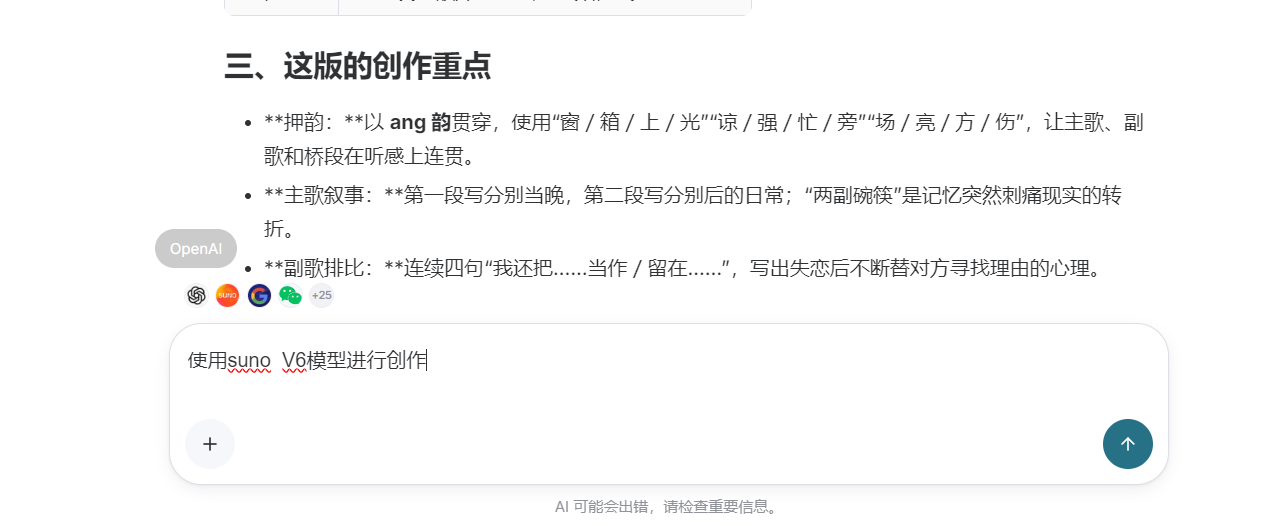
After confirming the lyrics and style, I will input the next request: use Suno V6 model for creation. The actual available models and options depend on the interface at the time of creation.
The song is generated. Below are the results—you can listen and compare which version better matches your expectations:
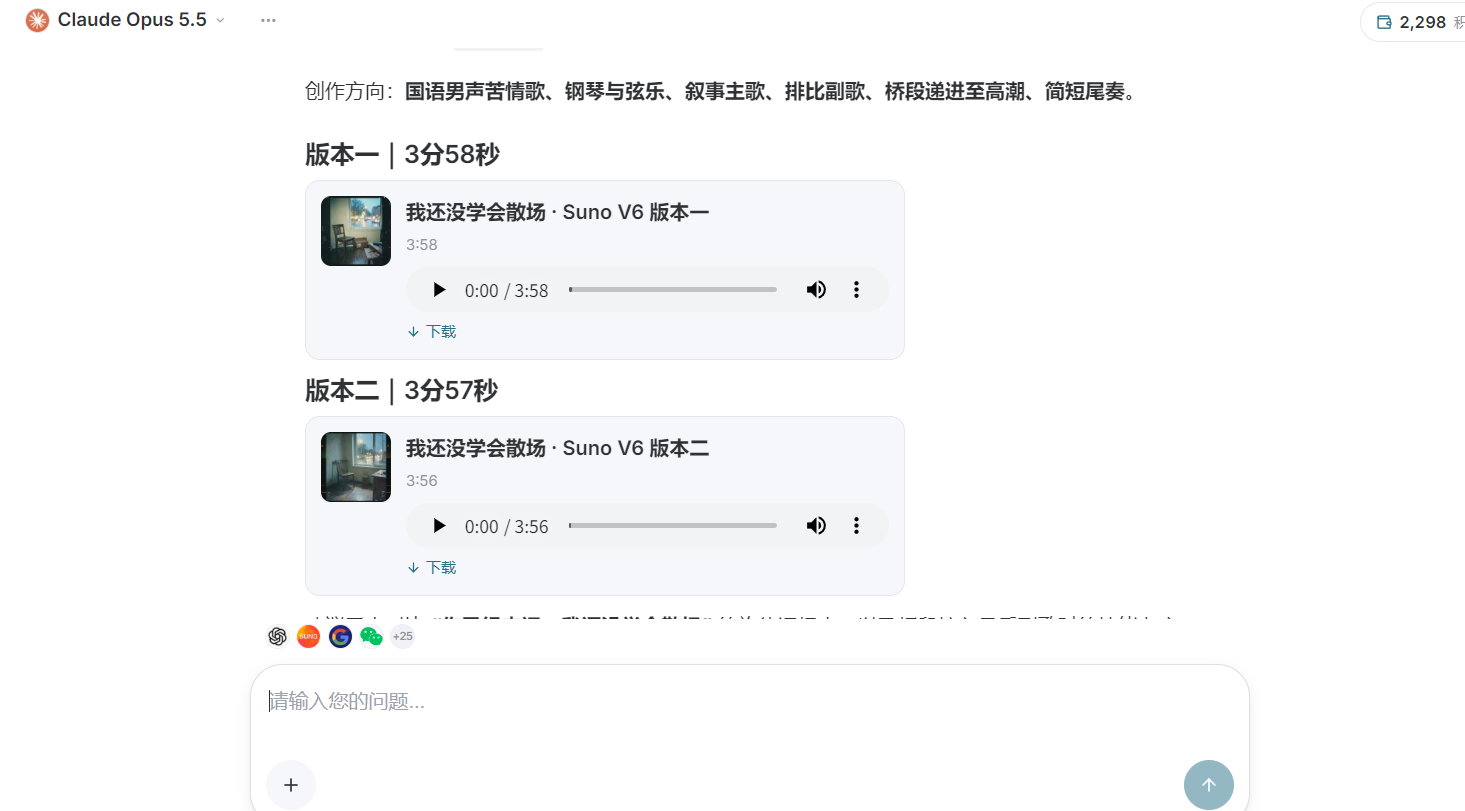
During listening, focus on three points: is the chorus memorable, does the vocals match the emotional tone of the lyrics, and does the transition from bridge to final chorus feel natural. If any part isn’t quite right, return to the chat, clearly state the issue and your goal, then try another version.
¶ Summary: treat creation as an iterative process
In this process, the workflow can be summarized as: describe ideas → generate lyrics and style → revise through dialogue → request Suno generation → listen and continue adjusting. For beginners without songwriting or arrangement experience, the biggest benefit isn’t “press a button and get a perfect product,” but starting from a simple idea and gradually refining the song to your liking.
This completes the process from conceptualization to new song creation. You can also explore other features later, such as cover versions: for example, under appropriate licensing, trying different singing styles or arrangements of the same song. Writing an initial draft, listening carefully, and clearly providing feedback is a great starting point.
Reference: Ace Data Cloud Suno Music Generation API