

Can a song, if sung in a different way, bring about a completely different feeling?
An originally quiet lyrical song, changed into a pop arrangement with more distinct drum beats; an originally emotionally intense work, changed into a gentle version with only piano and vocals.
The lyrics are still those lyrics, the story is still that story, but when heard, it may feel as though the narrator has changed.
This time, we will not start writing a song from scratch, but instead talk about another interesting direction: handing an existing song to AI and trying to create a cover version in a different style.
Below, using the approach of AceData Studio paired with Suno as an example, let us look at how to organize a simple idea into an executable creative request. This article provides operational ideas and prompt examples, and does not represent a new hands-on test record; specific capabilities, models, and parameters are subject to the tool responses at the time of use.
¶ 1. Do not rush to generate; first understand what you want to change
When many people first try AI music, they directly enter:
Help me make a cover of this song.
This sentence is certainly intuitive, but it is not specific enough.
Do you want gentler singing, or a more powerful expression? Do you want to preserve the emotion of the original song, or try a noticeable style change? These choices will all affect the creative direction that follows.
So, before starting, you can ask in the chat box like this:
I want to use Suno to make a cover of an existing song. Please first confirm the currently available related features, supported audio input methods, and the information I need to provide. Do not start generating yet.
Clarifying the process first, then submitting the task, is often more worry-free than repeatedly revising after generation.
There is also no need to get caught up in model names from the beginning. The actually available models and parameters are subject to the information returned by the current connector.
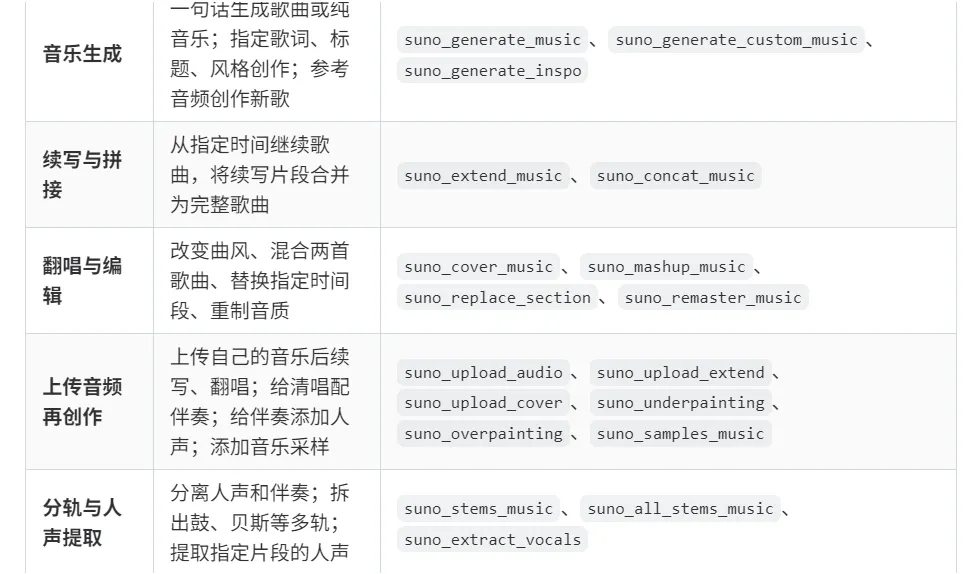
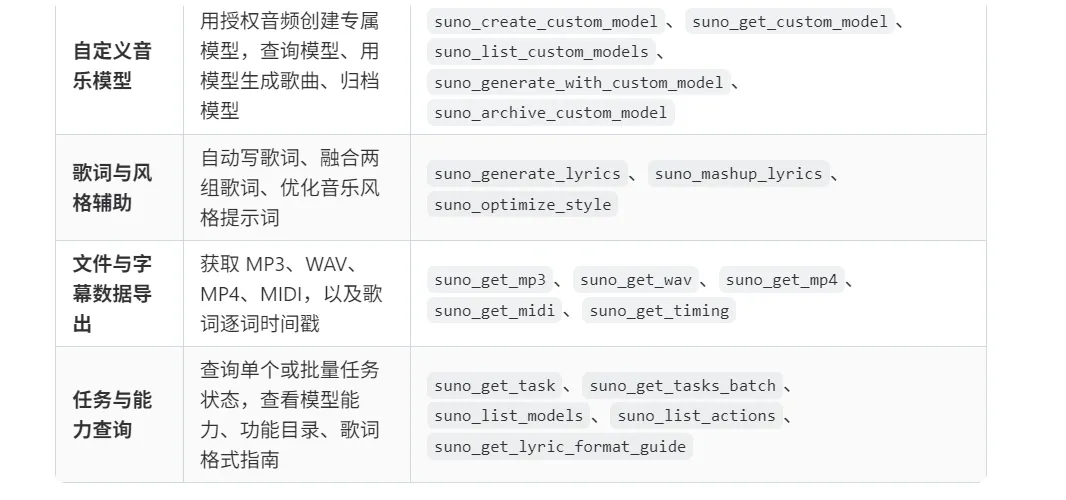
¶ 2. Prepare the original song, so that subsequent operations have clear source material
Making a cover is different from generating from scratch; first, you need a song to serve as a reference. You can start with works you created yourself or works for which you have already obtained authorization, and first let the AI confirm how the current feature supports audio submission.
If using a link, it is recommended to first check:
- Whether it can be opened normally in a browser;
- Whether login or additional authorization is required;
- Whether the link has expired;
- Whether it points to usable audio, or merely a sharing page.
If you only have a local file, do not rush to upload it everywhere. First confirm the upload methods supported by the current interface and connector, then proceed according to the instructions.
In addition, try to use songs you created yourself or songs for which you have already obtained authorization. Being able to submit audio does not mean you have obtained authorization for adaptation, distribution, or commercial use.
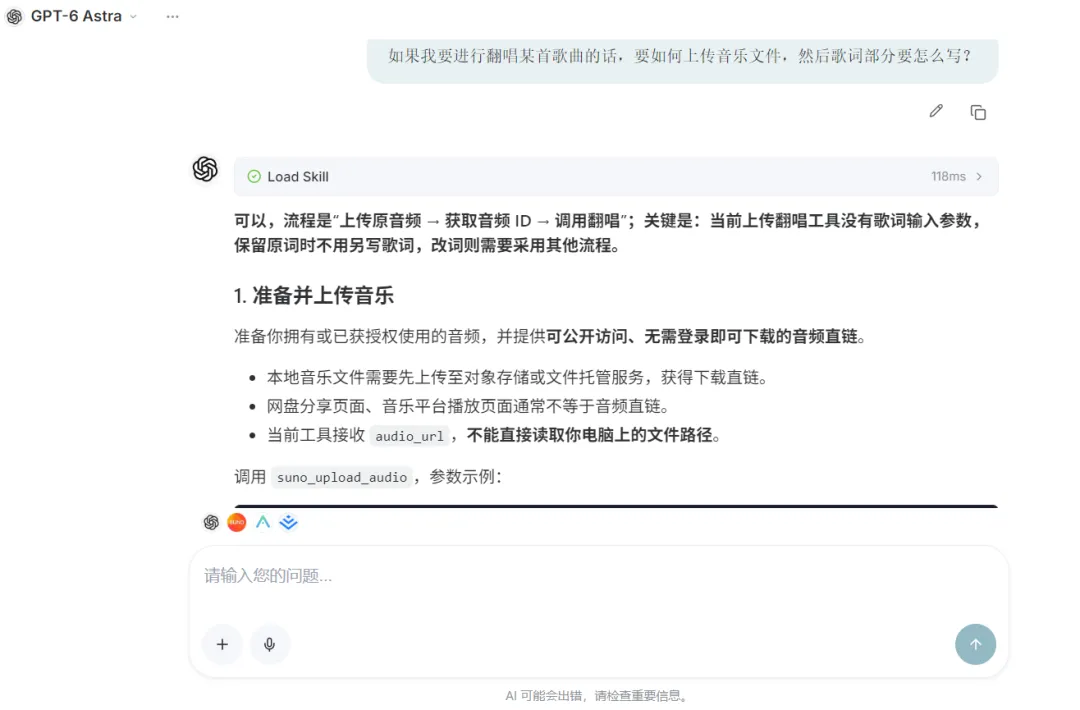
This is the song to be covered
¶ 3. More important than “help me make a cover” is explaining what you want to hear
After preparing the audio, it is time for the part most worth putting some thought into: describing the requirements.
You do not necessarily need to understand professional terminology. You can say “like softly telling a story alone at night,” or “be a little restrained at the beginning, then push the emotion up in the final chorus.” The key is not how professional the words are, but whether the goal is clear.
It is recommended to explain at least four things clearly:
First, the overall style. Is it lyrical pop, light folk, or an arrangement direction leaning toward electronic music?
Second, the vocal feel. Is it warm, clear, deep, or with a slightly husky texture?
Third, the instruments and rhythm. Do you want the piano to stand out more, or mainly use acoustic guitar? Should the drum beats be lighter, or have more driving force?
Fourth, what to retain and what to change. Which parts do you hope to retain as much as possible, and which parts can be boldly experimented with?
For example, you can write like this:
Please first assess whether the following requirements are feasible based on the capabilities of the current cover feature. Do not generate directly yet. Source material: Enter the original song link here, or use the uploaded audio. I would like to try a warm lyrical pop version with a slight sense of loneliness. Use piano and acoustic guitar as the main arrangement direction, with lighter drum beats, and do not make it into an obvious dance track. The vocal expression should be natural and restrained. The verses should feel like quiet narration, and the chorus should gradually intensify the emotion, while avoiding excessive screaming. I hope to retain the narrative and recognizability of the main melody of the original work as much as possible. If some requirements cannot be guaranteed, please explain first and provide alternative options.
It should be noted that these descriptions are creative goals, not guarantees of the generated result. The actual degree of retention and extent of change still need to be judged through listening.
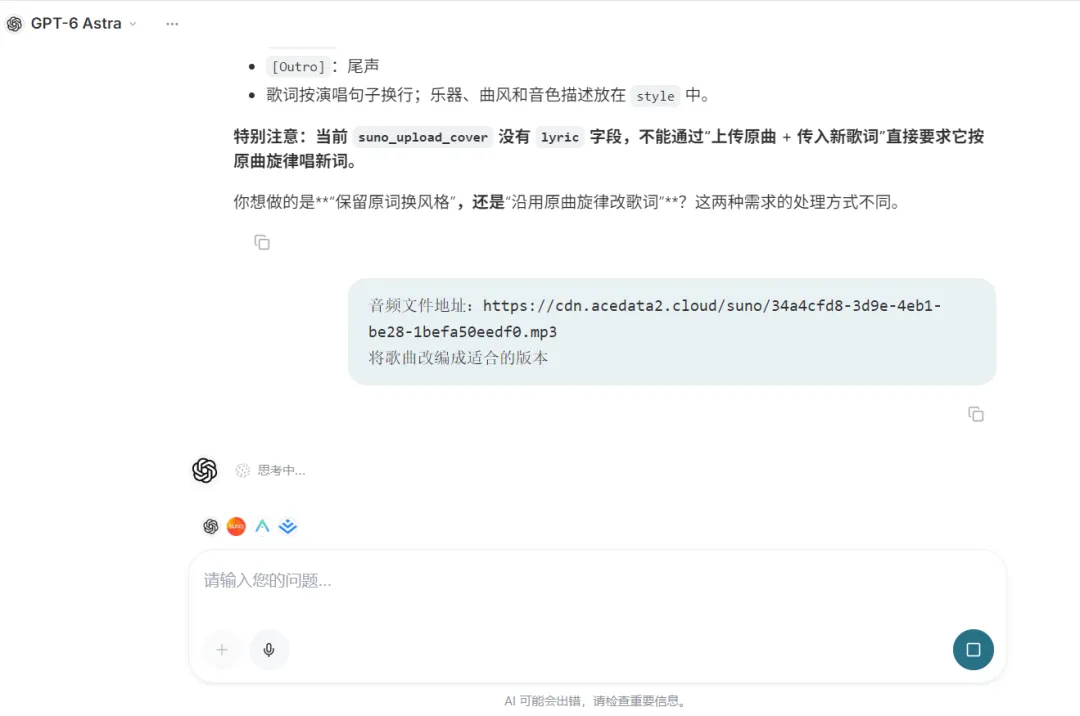
¶ 4. Determine the direction first, then let AI execute
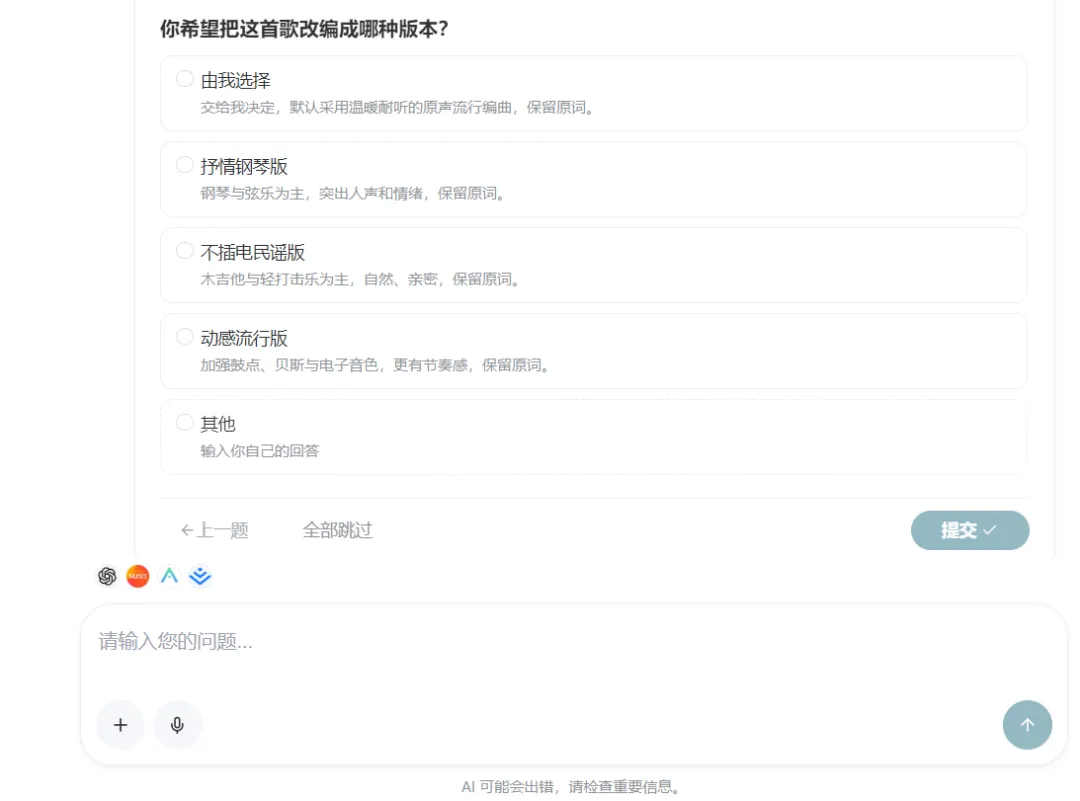
If you do not yet have a clear idea, you can also first let AI provide several distinctly different options.
| Direction | Desired feeling | Arrangement ideas to try |
|---|---|---|
| Gentle lyrical version | Quiet, intimate, with a touch of regret | Piano, acoustic guitar, light drum beats |
| Light pop version | Bright, light, rhythmic | Clear drum kit, bass, a small amount of synthesizer |
| Atmospheric narrative version | Spacious, restrained, emphasizing the sense of story | Ambient backing, sparse percussion, silence |
These are not fixed templates, but rather starting points to help you make choices. If the lyrics are about loneliness and waiting, you can prioritize a restrained lyrical direction. This does not mean it cannot be made into a lighthearted version, but first let the arrangement serve the story, which usually makes it easier to judge whether the work meets expectations.
You can also add a sentence:
Please first provide brief plans for two directions, explaining what each would change. After I choose one, start generating.
In this way, you are not handing all decisions over to AI, but using AI to help yourself organize your creative ideas.
¶ V. When waiting for results, do not treat the time required as a fixed standard
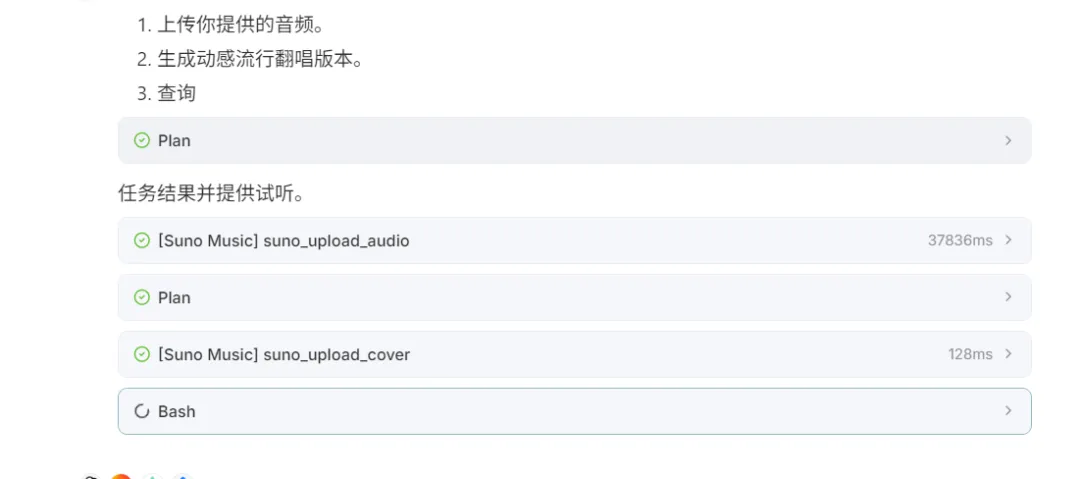
After confirming the materials and direction, connect the corresponding functions according to the current interface prompts and submit the task.
Generation speed may be affected by factors such as task type and service status, so there is no need to judge whether your task is abnormal based on the time someone else experienced once.
More importantly, pay attention to:
- Whether the materials have been successfully accepted;
- Whether the task has been submitted properly;
- Whether the current status is still being processed;
- Whether there is a clear reason when a failure occurs.
While the task is still running, check the status first. Do not repeatedly submit the same request just because you have not seen the result yet.
¶ VI. When listening to the preview, do not only ask, “Does it sound good?”
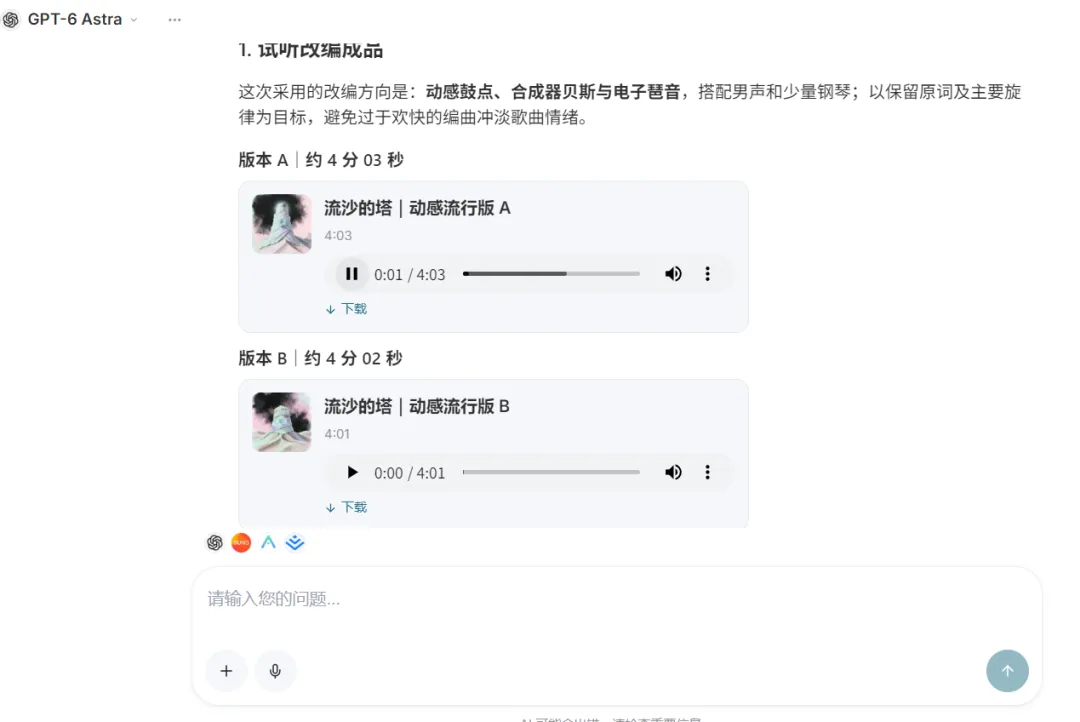
After getting the result, you can of course listen based on feeling the first time. But if you want to continue optimizing it, you can listen with questions the second time.
¶ 1. Does the emotion match the lyrics?
Are the lines about regret too cheerful? Do the parts expressing hope still feel overly repressed?
¶ 2. Does the vocal sound natural?
Pay attention to articulation, sustained notes, and the sense of breathing, and see whether there are any parts that affect comprehension or break immersion.
¶ 3. Does the chorus have layers?
Is there any change between the verse and chorus? Is the emotion really being built up, or is everything simply becoming louder?
¶ 4. Do the changes match the original goal?
If what you originally wanted was “gentler,” but it ended up becoming “more lively,” then the direction needs to be adjusted again.
It is recommended to save the original song and cover version side by side in your own creative records, so that you can compare them repeatedly. This article does not include unverified or unauthorized preview audio.
¶ VII. When revising, solve one main problem at a time
If the first version does not meet expectations, you do not necessarily need to discard the entire set of requirements and start over. More effective feedback is often:
The overall atmosphere of this version can be retained, but the drum beat is too prominent. I hope it can be softer, so that the vocals are more forward.
Or:
The expression in the verse meets expectations, but the chorus lacks variation. I hope the final chorus has more layers, while retaining the restrained singing style.
Compared with “make it sound better,” this kind of feedback is clearer and makes it easier to judge whether the next adjustment has improved things.
Of course, whether specific partial modifications or continuations can be made, or whether regeneration is required, should first be confirmed based on the currently available functions. Do not directly treat creative wishes as abilities the tool already has.
¶ Final words: AI lowers the operational barrier, but it does not make aesthetic decisions for you
We prefer to view AI music as a way to experiment with ideas.
In the past, a thought such as “What would this song sound like as a piano version?” might have quickly passed. Now, we can first express that thought clearly, then try to turn it into a version that can be previewed, compared, and further revised.
But whether a work moves people ultimately still comes back to the lyrics, melody, expression, and your own judgment.
There is no need to pursue a “perfect cover” from the very beginning. First find a direction worth trying, and let the same song have another form of expression—that is already very interesting.
If you also want to give it a try, you might as well start with one of your own original works. This time, do not first ask AI, “Can you do it?” Try telling it:
“What I hope this song feels like.”
Go to AceDataCloud Studio to start organizing your creative ideas, or view music-related connections on the Connectors page.